
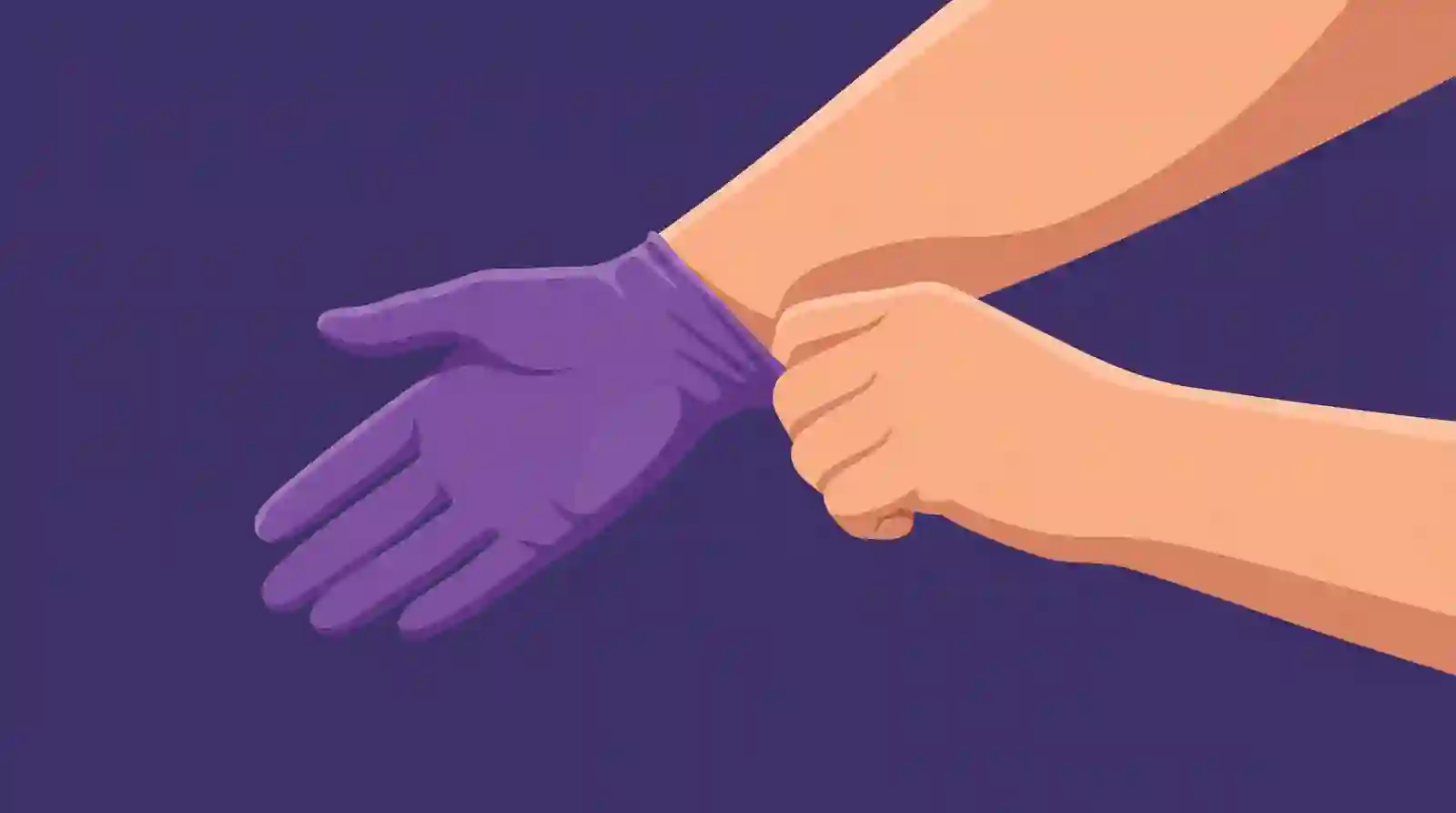
A glove is a barrier from the moment it goes on to the moment it comes off. Most of the risk sits in those two moments, and both are easy to get right.
Before anything else
Clean hands, dried thoroughly. Damp hands make donning harder and trap moisture against the skin for the length of the shift. Check the glove for visible damage and confirm the size.
Donning
| 1 | Take the glove from the top of the dispenser box, touching only what you take |
|---|---|
| 2 | Hold it at the cuff and slide the hand in without stretching the fingers |
| 3 | Seat each finger, then roll the cuff over the wrist |
| 4 | Repeat for the second hand, touching the outer surface as little as possible |
| 5 | For sterile procedures, keep gloved hands above the waist and in view |
Doffing
This is where contamination usually happens. The rule is simple: the outside of a used glove never touches bare skin, and bare skin never touches the outside of a used glove.
| 1 | Pinch the outside of one cuff and peel the glove off, turning it inside out |
|---|---|
| 2 | Hold the removed glove in the still-gloved hand |
| 3 | Slide a bare finger under the cuff of the second glove — from the inside |
| 4 | Peel it off over the first glove, so one contains the other |
| 5 | Dispose in the correct waste stream, then clean your hands |
The mistakes that undo it
Reusing
single-use means single use, every time
Washing
disinfectant degrades the barrier it is meant to protect
Wrong size
tight gloves tear, loose gloves lose grip
Skipping hygiene
gloves supplement hand cleaning, they do not replace it
Good technique costs nothing and protects everything. It is the cheapest safety measure in the room.